
A thermostat may be a small part of your HVAC system but it controls a lot more. Whether you’re swapping out an old one or thinking about going with a smart thermostat, picking the right model and getting it installed properly makes a big difference everyday. Breath Assured is among the leading companies which provide thermostat installation in Halifax along with expert tips for homeowners to keep it running for years to come. Before you commit to anything, it helps to know your options. This guide explains what types of thermostats are available, how the installation process goes and what your current system can support.
 Why Consider a New Thermostat?
An old or a worn out thermostat makes it hard to keep your home at a steady temperature. If it keeps cycling on and off out of nowhere, shows the wrong reading or just doesn’t respond when you adjust it, that’s usually your sign to replace it. It’s also worth replacing if you’re upgrading your HVAC system. Depending on what model you buy, you could get better scheduling, tighter temperature control and a few new features that make things easier.
Choosing the Right Thermostat for Your Home
Whatever you pick needs to match with your HVAC system and fit how you want to control your home’s temperature.
- Manual thermostats keep it simple, good if you’re happy just turning a dial.
- Programmable thermostats let you schedule changes around your routine.
- Smart thermostats add mobile control, scheduling, monitoring and smart home integration, depending on the model.
Whichever one you choose, check its compatibility with your current HVAC system.
Can You Install a Thermostat Yourself?
Some thermostat installations look easy enough on the surface but the wiring underneath needs attention and care. You need to know your current wiring and confirm that the new thermostat is compatible with your system before doing this yourself. If you are unfamiliar with the wiring process or you’re not sure about system compatibility, it’s safer to get professional help.
What You Need for Thermostat Installation
The requirements depend on the thermostat and your HVAC system. A basic thermostat installation depends on:
- A compatible thermostat
- Basic hand tools
- Wire labels or masking tape
- A level for mounting
- A voltage tester when needed
- A smartphone or app for smart models
Having the proper tools helps but knowing your wiring and system matters more.
Steps Involved in Thermostat Installation
Every install’s different because not every thermostat is the same but the general process looks like:
Turn Off the Power
We power off your HVAC system before touching any wiring. Keeps you and the equipment safe.
Remove the Existing Thermostat
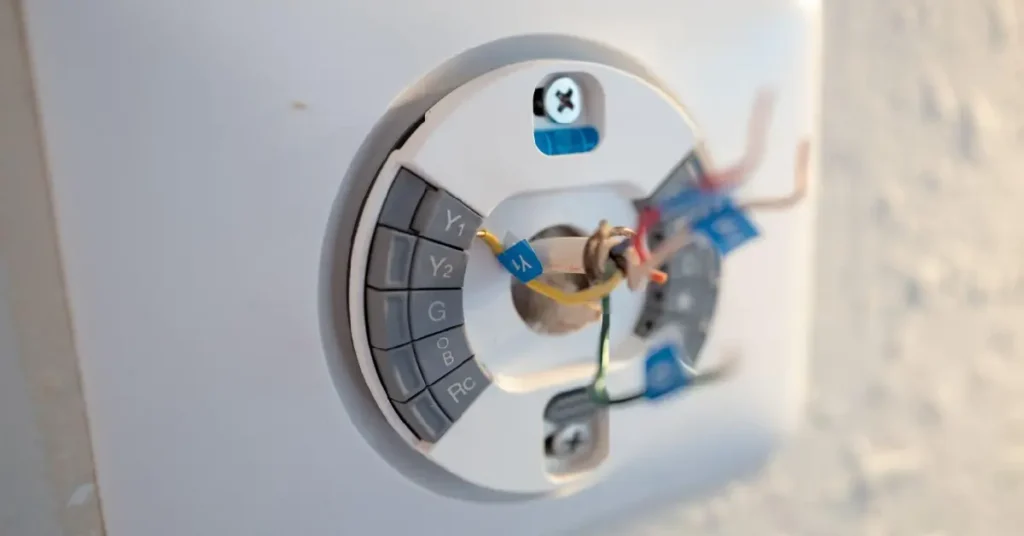
The old thermostat is carefully taken off and then wires are identified before disconnecting anything. Labeling them saves a lot of time and confusion later.
Check the Wiring
Next is confirming your wiring works with the new thermostat. Smart models sometimes need power or wiring that an older setup doesn’t have.
Install the Mounting Plate
The mounting plate is secured and leveled with the wall. The thermostat also needs to be installed somewhere that gives an accurate read of your home’s temperature.
Connect the Wires
The wires are then connected up to the right terminals, following the thermostat manufacturer’s directions and what are your HVAC system requirements.
Install and Test the Thermostat
After the thermostat is mounted, the power is switched back on and the system is tested. Your heating and cooling equipment should respond properly to the thermostat settings.
Set Up Smart Features
For smart thermostats, that final setup includes connecting to Wi-Fi, downloading the app and setting your schedules & temperatures.
Common Thermostat Installation Mistakes
Small installation errors can throw off how well your thermostat actually controls your system. A few common ones are:
- Picking a thermostat that isn’t compatible
- Wiring to the wrong terminals
- Working on wiring with the power still on
- Putting the thermostat somewhere near a draft or direct sunlight
- Missing extra wiring smart thermostats sometimes need
- Not testing the system afterward
Checking compatibility and getting the details right up front means you avoid dealing with these problems later.
Benefits of Professional Thermostat Installation
Having a professional installation means your thermostat’s matched, wired and tested properly with your HVAC system. An HVAC technician catches wiring problems, finds the right spot for the thermostat and confirms it’s actually linked properly to your equipment. That matters even more with heat pumps, multi stage systems or smart thermostats that need extra wiring.
How to Choose the Right Thermostat for Your HVAC System
The right thermostat should match your HVAC system and your home requirements.
Identify Your HVAC System
Know if you have a furnace, heat pump or multi stage system. Different setups often call for different thermostat types.
Check Compatibility
Make sure it works with your equipment and wiring. Smart thermostats sometimes need more complicated wiring.
Consider Your Lifestyle
Think about how you want to control your home’s temperature. Programmable and smart models give you more room to work with.
Think About Long-Term Comfort
Look for features that fit your routine and keep things comfortable year round.
Final Thoughts
The right thermostat takes a lot of the guesswork out of managing your home’s heating and cooling. New installation, smart upgrade or replacing an outdated thermostat, compatibility and proper installation should come first every time. If you’re looking for a reliable thermostat installation in Halifax, Breath Assured is the most trusted service provider for it, because we help you pick the right thermostat and professionally install it, keeping your home comfortable long term.